
Garage door maintenance in Plantation and Davie
Door getting louder, slower or heavier? A maintenance visit checks balance, the safety reverse, rollers, cables and track brackets before something breaks. Florida heat, humidity and summer rain wear on all of them.
Usual visit: about 1 hour
Signs your door is due for a check
- It got louder: squeaks, rattles or a grinding sound.
- It moves in jerks or shudders on the way up.
- Raising it by hand takes more effort than it used to.
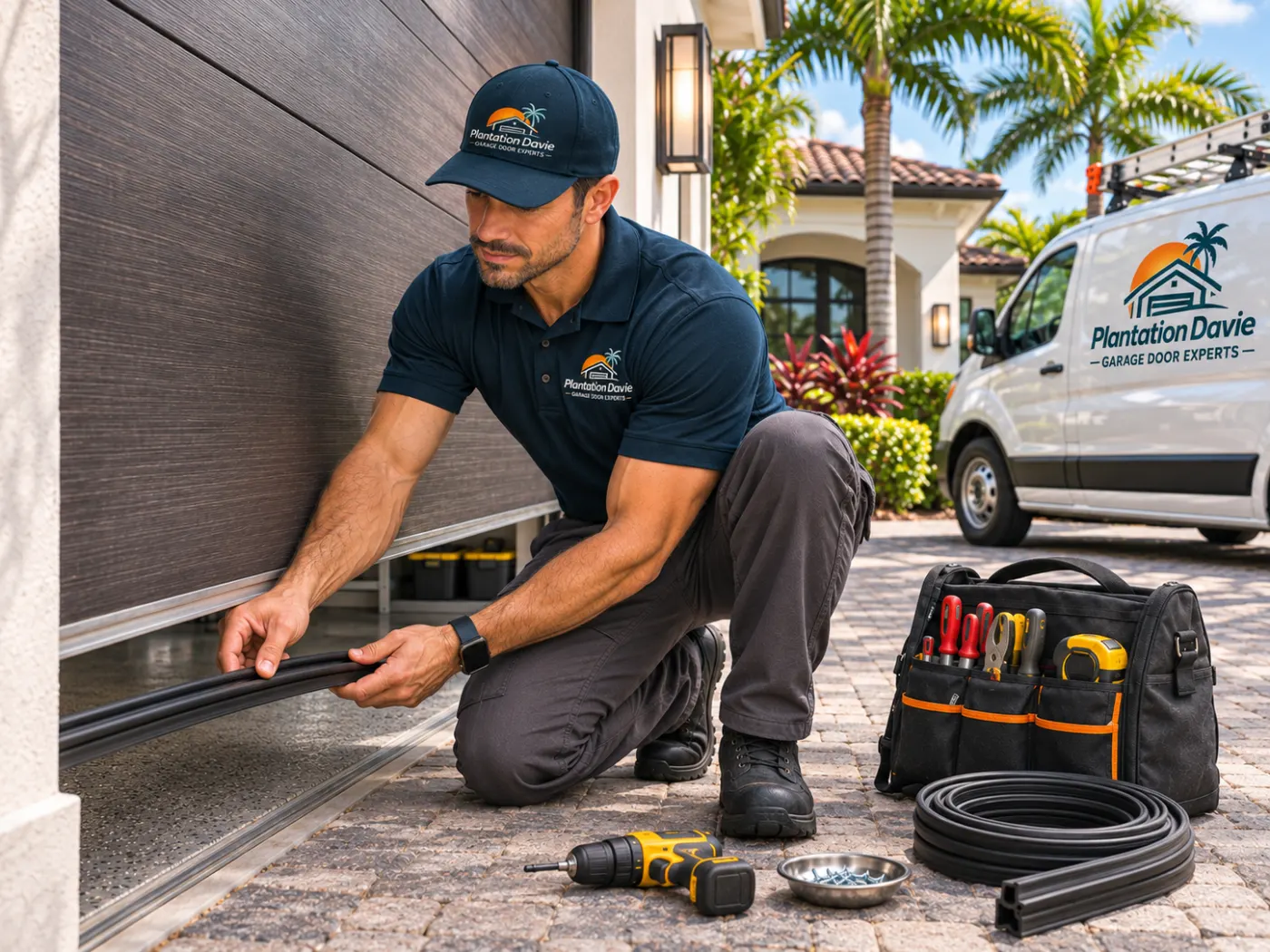
- After a downpour, water creeps under the rubber seal at the bottom.
- The opener strains, or the door stops partway.
- No one has checked it since you bought the house.
What a maintenance visit checks
- Balance, with the opener disconnected.
- The safety reverse and the sensors.
- Springs, for rust, gaps and stretch.
- Cables, for fraying at the bottom brackets.
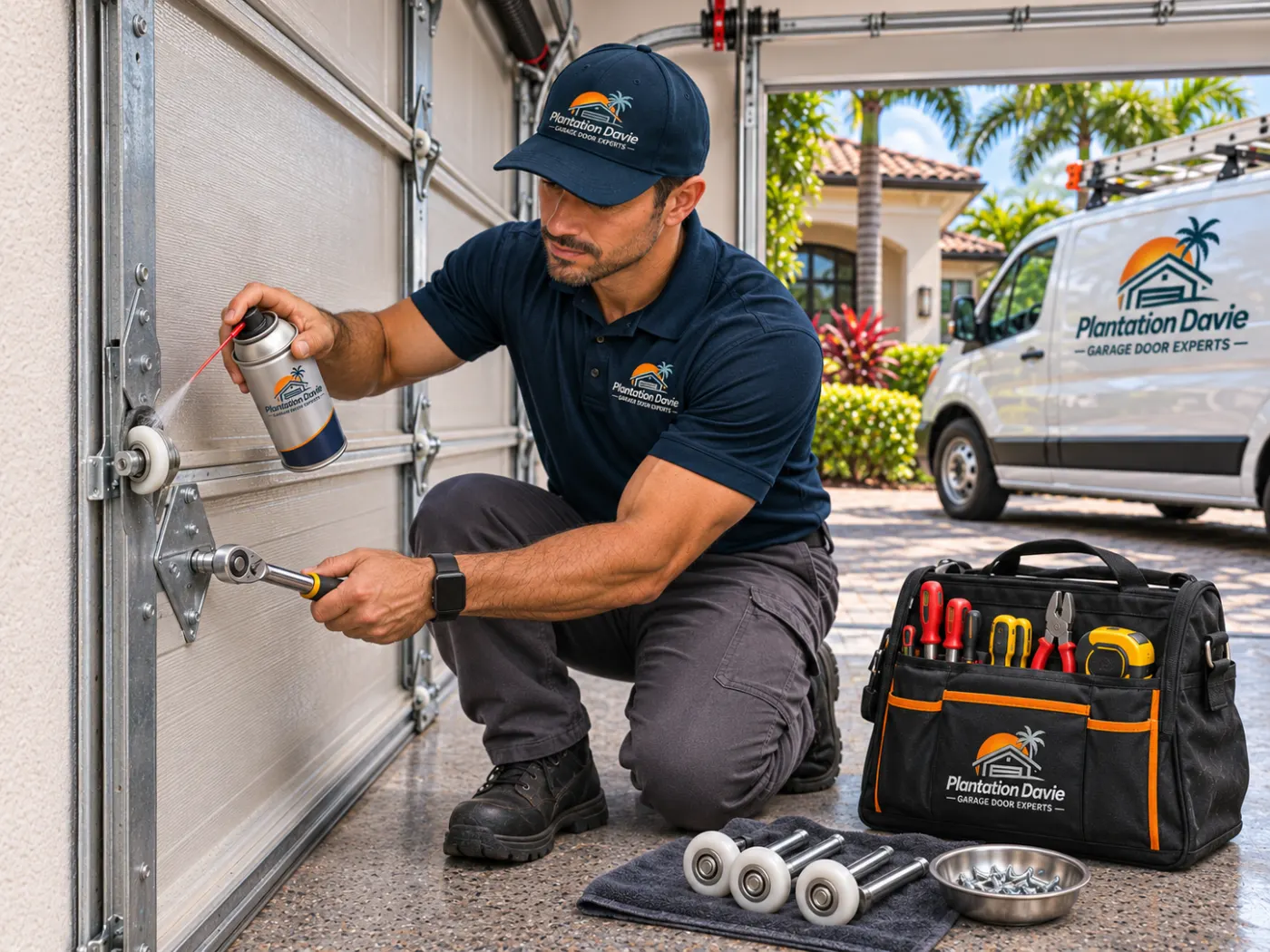
- Rollers, hinges and bearings, which we lubricate.
- Track alignment, brackets and screws. On a door rated for wind, these are part of its approved drawing.
- The opener's rail, its drive and its travel limits.
- The rubber seal along the bottom, and the lock.
You get a written list of what's worn and what it would cost to fix. Parts that still do their job stay on the door.
Two tests you can do yourself
Balance test. Close the door and tug the release cord; that unhooks it from the opener. Now raise the door to roughly waist height and let go. If the springs are right, the door hangs there or drifts slowly. If it falls or shoots up, the springs need adjusting: call us, and don't adjust them yourself. If lifting is hard for you, skip this one and we'll do it on the visit. Most openers hook back up the next time you run them.
Reverse test. Set a 2x4 flat on the floor at the center of the doorway, then run the door down with the opener. The moment it meets the board, it should turn around and go back up. Then close it again and pass a broom handle through the sensor beam: the door should go back up. If it fails either test, stop using the opener until it's fixed. See sensor repair.
Can I use WD-40 on my garage door?
You can use WD-40 to clean, but it isn't the right lubricant for a garage door. It was made to push out water and loosen grime, and the film it leaves is thin. For the moving metal parts, use a spray lubricant labeled for garage doors, either silicone or white lithium.
Spray the hinges, the steel roller bearings and a light coat on the springs. Skip the tracks: rollers should roll, not slide, and grease in the track collects dirt. Don't oil nylon roller wheels or a belt drive.
Heat, humidity and summer rain in Plantation and Davie
These are the three things that wear a door out here:
- Heat dries out lubricant and the rubber bottom seal, and a garage facing west bakes every afternoon.
- Humidity brings surface rust to springs, cables and screws.
- Afternoon storms in summer push water under a cracked seal and wash grit into the tracks.
Book a professional check once a year. As storm season nears, also make sure every track bracket screw is tight. On a rated door, brackets and fasteners are part of its approved drawing.
Maintenance questions owners ask
A yearly visit fits most homes in Plantation and Davie. Do your own balance and reverse tests every few months, and call sooner if the door gets loud, slow or heavy.
No, the tracks should stay clean and dry. Rollers are meant to roll inside the track, and grease there traps dirt and leaves. Put lubricant on the hinges, the springs and the bearings inside the rollers instead.
Maintenance helps a rated door stay the way it was approved. Its approved drawing sets the brackets, hinges and fasteners, and loose or missing ones can weaken it. A yearly check catches those before a storm does. It won't turn a door that was never rated into an impact door; see impact garage doors.
Yes, cleaning, lubricating and the two safety tests are fine for most owners. Spring adjustment, cable work and anything at the bottom brackets is not, because those parts are under tension.
Start with the symptom
Call or text with what you see and hear, plus your ZIP code. Home visits Monday to Saturday. If your door won't close, we come any day to secure it.