
Garage door troubleshooting: why your door won't close
If your garage door won't close, check the two sensors by the floor first: a blocked or dirty sensor is the easiest cause to rule out. Below, what's safe to check and when to stop.
Usual visit: About 1 hour to find the cause
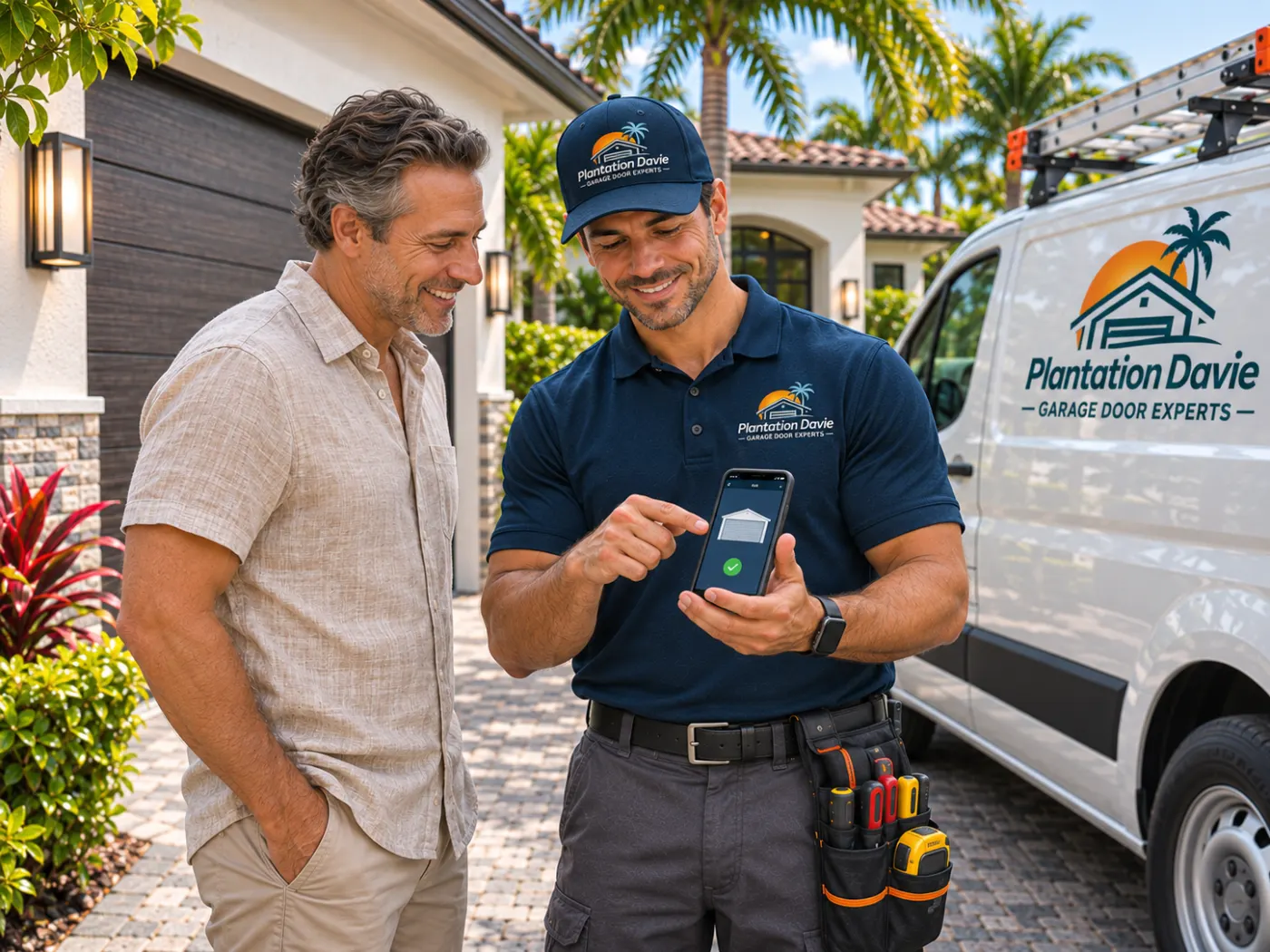
Which one sounds like your door?
- It starts down, then reverses back up.
- The opener's bulb flashes, and the door won't budge from the open position.
- It closes fine except when the afternoon sun hits the garage.
- It goes down only while somebody keeps pressing the wall control.
- It won't open, or the opener hums and nothing moves.
- It grinds, squeals or shakes on the way.
Start with three quick checks
- Power. Is the opener's light working? If not, check the outlet and reset any tripped outlet or breaker in the garage.
- The lock setting. Plenty of wall controls include a lock (sometimes called vacation) setting that blocks every remote. Wall control works, remotes don't? That's probably it.
- The sensors. Each sensor near the floor has a small light. A dark or flickering light means the beam is blocked, a lens needs wiping, or a sensor was knocked off aim.
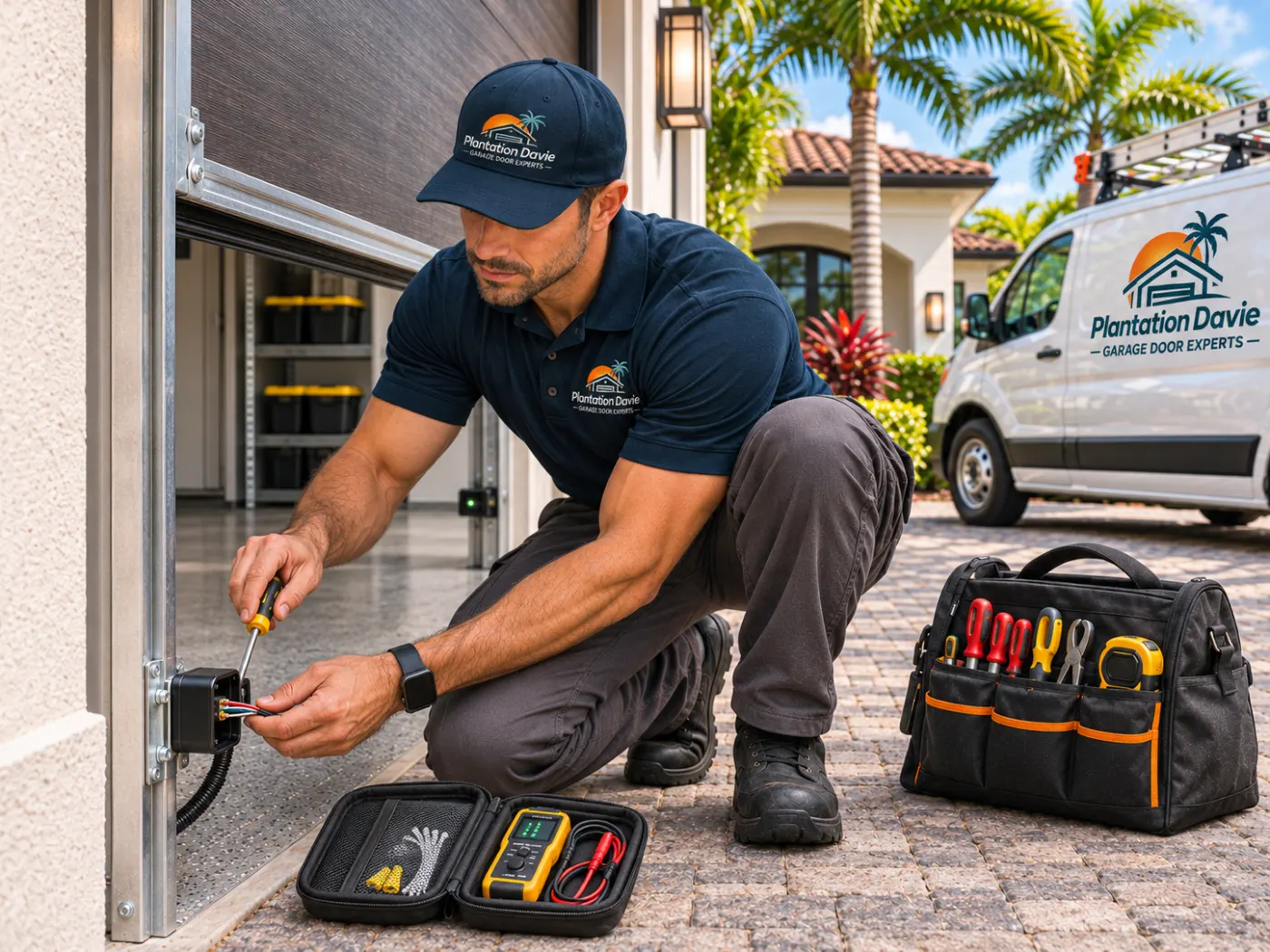
How we troubleshoot a door at your house
Our first look is at the door itself. With the opener unhooked, we lift the door ourselves to judge its balance, then go over the springs, cables, rollers and tracks. After that we test the opener: sensors, travel limits, force and the safety reverse.
You hear the cause before you hear a price, and you get the total in writing before we fix anything. If all it needed was a clean sensor, we tell you so.
Garage door won't close, and the opener light is blinking
A blinking light on the opener, with a door that won't go down, usually points to the safety sensors. Many openers blink a set number of times to show what's wrong, and your opener's manual lists the codes.
Make sure the beam path is empty, wipe the lenses gently with a soft rag, and look at the sensor lights. A sensor that got knocked crooked can be aimed back by hand until its light glows steady. If the lights stay off or a wire is cut, see garage door sensor repair.
Garage door won't close in direct sunlight
When the sun sits low and points right at a sensor lens, it can dazzle the sensor until the sun drops lower. Garages that face west get it in the late afternoon.
Hold a sheet of cardboard so it shades the receiving sensor, then press the button. Door shuts? The sun was the problem. A small shade, or swapping the two sensors to opposite sides, often solves it. Our sensor page covers the fix.
Door closes only while the wall control is held down
Holding the wall button down is a built-in override for failed sensors: the opener will close as long as your finger stays on the button. It tells you the sensors need attention.
Use it only while you watch the door reach the floor. Then check the sensors as above, or book a sensor repair. Don't bypass or unplug the sensors: they're what makes a descending door turn back before it hits a child or a dog.
The door goes down, then goes back up
A door that touches the floor and reverses, or turns around halfway, is reacting to something it reads as an obstacle. Look for a rake, a mat or leaves under the door, and check the sensor beam. The opener's close limit can also be set too far.
If the floor is clear and the sensors glow steady, the door may be binding in its track or out of balance, and the opener feels the drag. That's a job for us. Don't turn up the opener's force setting to push through it: that is a safety setting. See garage door opener repair, or spring repair if lifting it feels heavy.
Garage door won't open
First rule out the easy ones: power to the opener, the lock setting on the wall control, and the battery in the remote. If only a remote fails, see remote and keypad programming.
If the opener hums, or the door rises a little and quits, stop pressing. That is the classic sign of a broken spring, especially after a loud bang. Keep it closed and read spring repair. If the motor whirs and the door doesn't budge, the opener may be disconnected from the door or have a worn gear: opener repair.
Grinding, squeaking or a loud bang
Squeaks usually come from dry hinges and roller bearings, and a garage door lubricant fixes most of them. See garage door maintenance. Grinding from the opener can mean worn gears, while grinding at the tracks points to worn rollers or a bent track.
A single loud bang, like a firecracker, is different. That's usually a spring breaking. Don't run the door; go to spring repair.
Door sits crooked, one side lower
A crooked door has lost lift on one side, usually from a snapped or slipped cable. Pull the opener's plug, keep everyone at a distance, and don't pull the release. Read cable and off track repair.
Common garage door myths in Broward
A few common ideas about garage doors in this area, and how they really work:
- “The hurricane zone depends on your city.” Not in Broward. Every part of Broward County falls in the HVHZ, and Florida's Building Code sets 170 mph for most homes.
- “Every garage door in Broward must be an impact door.” Almost: the door has to resist the large missile test (a 9 pound 2x4 moving 50 feet per second) on its own, or be covered by an approved protection device.
- “A wind rating label proves the door passes.” The label is a good start; the door must also match its approved drawing.
- “Any repair voids an impact door's rating.” A repair made with the parts the door's approval lists keeps the door as it was approved.
Troubleshooting questions
A door that stops short or bounces back up is usually reacting to the safety sensors, something on the floor, or a close limit set wrong on the opener. Clear the floor, clean the sensor lenses, and confirm each sensor light glows steady. If it still reverses, the door may be binding or out of balance.
No, don't bypass or disconnect the safety sensors. Without them, a closing door has no way to notice a small child, a dog or a bumper in its path. Holding the wall button is a short-term override for a door you are watching, not a fix.
To tell the opener from the door, close the door, pull the release cord and raise it with your hands. If it lifts smoothly and stays put halfway, the door is fine and the opener is the likely problem. If it feels heavy, drops or sticks, the door is the problem: springs, cables, rollers or track.
Related services
Start with the symptom
Call or text with what you see and hear, plus your ZIP code. Home visits Monday to Saturday. If your door won't close, we come any day to secure it.